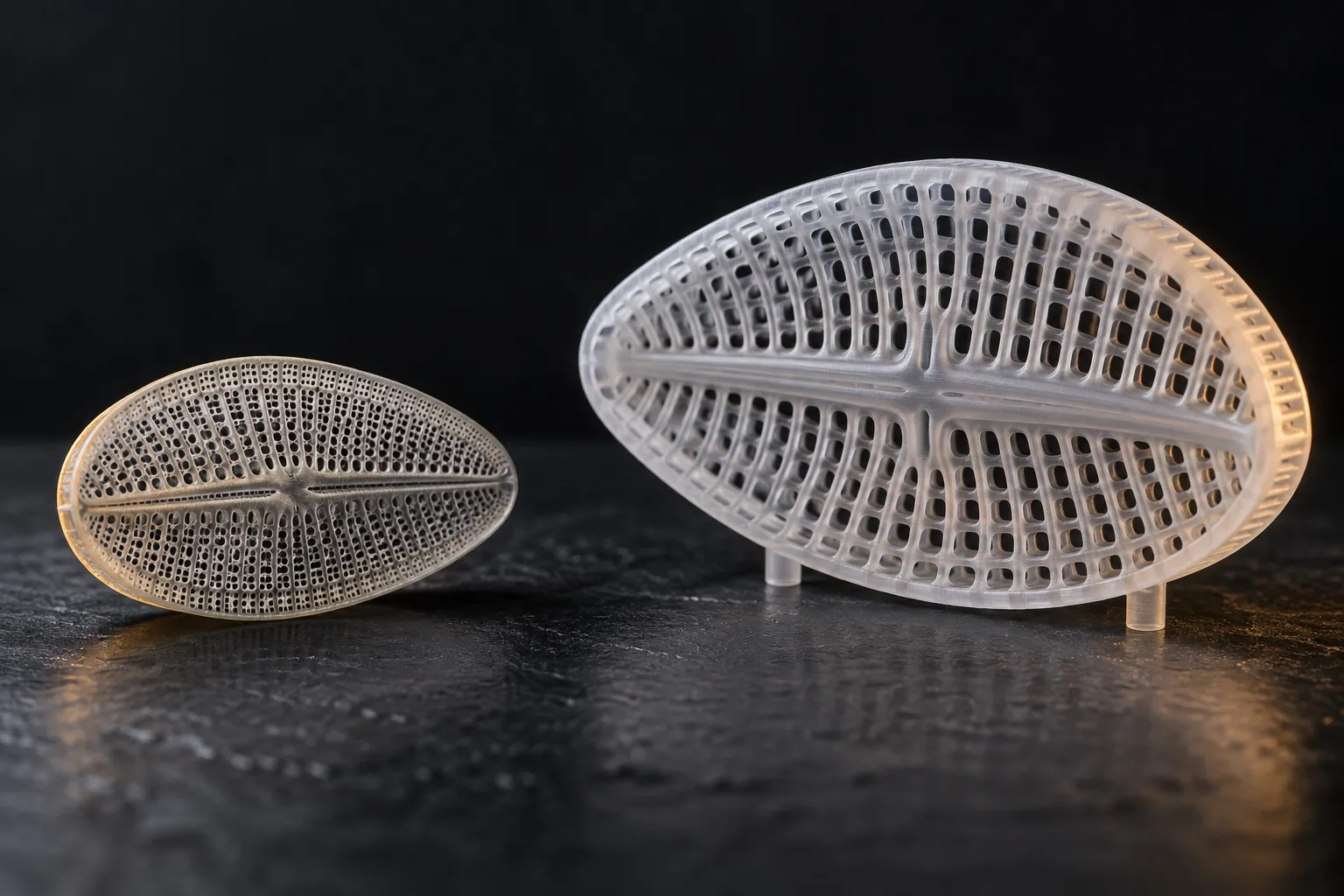
In March I did something fun.
When you work on an AI startup, the conversations around you are always the same few: coding agents, context engineering, and the “will AI replace programmers” debate that has been going on for almost two years. AI4Sci (AI for Science) comes up a lot too. AlphaFold, MatterGen, automated synthetic biology: everyone has heard a few of the names, but if you had asked me, as an engineer, to actually explain them, I would have been stuck.
So I had an AI write me a crash course on every field: physics, chemistry, biology, maths, plus the major branches of engineering. There was one rule. Every field had to be explained through CS analogies, with none of the field’s own jargon.
The CS analogies were only there to make things easier for me, but they forced me to look for what completely different fields have in common.
The three generations of CRISPR tools, from Cas9 to base editing to prime editing, look like this from the command line: rm plus cp, then sed s/A/G/, then str_replace. Each generation edits DNA more precisely and with fewer side effects. We are trying to control DNA the way we control a computer.
Metal-organic frameworks (MOFs) are more like a data structure you can customise however you like. Swap the metal node, or swap the organic linker, and the material’s pore size and chemistry change with it, which amounts to reprogramming the material. The work on MOFs won the 2025 Nobel Prize in Chemistry.
The AlphaFold story is very Google. Structure prediction is a decompiler; protein design is a compiler. Connect the two ends, and going from “I want a protein like this” to “I have that protein” becomes an engineering pipeline that actually runs.
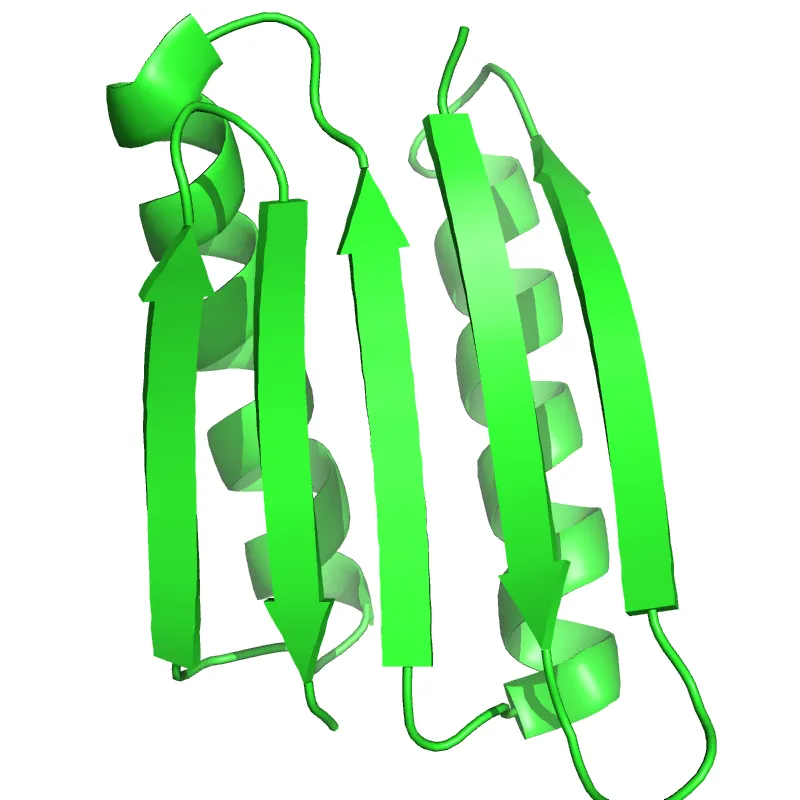
Top7, a protein designed by computer in David Baker’s lab in 2003, with a fold not found in nature. Image: Pablo Gainza, CC BY-SA 3.0, via Wikimedia Commons.

After twenty fields, I didn’t remember many fun facts. What stayed with me was one specific, clear feeling:
In experimental science and engineering, the starting point of more and more research is shifting from discovery to design.
Different industries and different researchers all landed on the same workflow: specify the goal, search for solutions, then verify. Chemistry, materials science, biology and every branch of engineering each got there on their own over the past decade. Nobody planned it, but taken together it looks like a single switch of tracks.
“Programming Nature” used to be a metaphor. It is getting closer to a literal description. Next to the question of replacing programmers, I think AI’s more underrated effect is that it is speeding up almost all of experimental science and engineering at the same time.
Going from discovery to design also changes where people stand.
Discovery answers to truth: nature speaks first, and we listen.
Design answers to will: we speak first, and nature listens.
Humans have always wanted to reshape nature. We wanted to fly, so we built aeroplanes; rivers wouldn’t behave, so we built dams and dug canals. We never seem to have been content just to look at the world.
But the main thread of natural science has always been discovery. Physics has a huge ambition: to find a grand unified model that writes down what the world really is, with as few equations as possible. Reshaping was mostly left to engineering. Science works out how the world is, and engineering turns it into what we want. We want to know what the world really looks like, and we also can’t resist getting our hands on it and changing it.
Today, maths and theoretical physics are still doing discovery. The change is on the lab side: chemistry, materials science and biology are merging with engineering, and when a researcher starts talking, the question is often already “what do I want?” That means you have to say what you want first, and then take responsibility for what you said.
Once you’ve said what you want, the next question is how to get it, and those two things often belong to different disciplines.
The target property might come from medicine, the search method from CS, and the verification from chemistry or physics. So the research with real leverage increasingly happens where fields meet: AI plus biology gave us protein design, and nanotech plus medicine gave us precise drug delivery. Research that stays inside one discipline looks more and more like it is working on minor details.
I think a single-discipline identity is turning into a burden. The researchers who will do best from here are probably the ones with compound identities: people who think about chemistry problems with computational methods, or use chemistry to train materials models. It reminds me of the piece I wrote on identity: a person’s identity looks more and more like a verb, and the same goes for researchers. CS engineers have a slight advantage here, because every design paradigm uses CS as a tool, provided you’re willing to read papers “outside your field”.
None of this will be news to a biochemist. Design has always been there for them: rational design has existed in molecular biology since the 1990s, directed evolution won the 2018 Nobel Prize in Chemistry, and retrosynthesis in chemistry is design by nature.
So what actually switched? I think it’s capacity. Rational design used to mean marking out the search space by hand; once there were many candidates, the combinations exploded, and verification was slow. Tools like AlphaFold and MatterGen have now cut the cost of prediction and generation by several orders of magnitude, and for the first time design can be done at scale, industrially. Discovery hasn’t stopped, of course; in 2024 people even found a new organelle. What changes is the ratio. In these experimental fields, discovery led for the past few centuries, and over the next few decades design’s share will keep growing.
Calling this “AI changes everything” is the oversimplification CS engineers tend to make; calling it “nothing has changed” is the arrogance the scientific world tends to have. The truth is somewhere in between: a paradigm that has existed for a long time has just got the compute it needed.
But compute only solves the design half. Whatever you design still has to be made in the physical world.
Fusion, room-temperature superconductors, solid-state batteries: these breakthroughs have been predicted for years, and the hard part for all of them is actually making the thing, running experiments again and again. A model can predict a crystal structure, but it can’t grow the crystal for you. Impurities, ageing equipment, regulation, and whether society accepts the result aren’t in the loss function either.
So the model I believe in is letting AI spin the loop of “hypothesis, experiment, verification, new hypothesis” faster, without skipping a single experiment. A lot of people think the bottleneck of the AI era is compute. I think it’s more likely to be matter: who can build reactors faster, grow crystals more cheaply, or cut clinical trials from ten years to three may decide the capacity of experimental science over the next decade more than the models themselves.
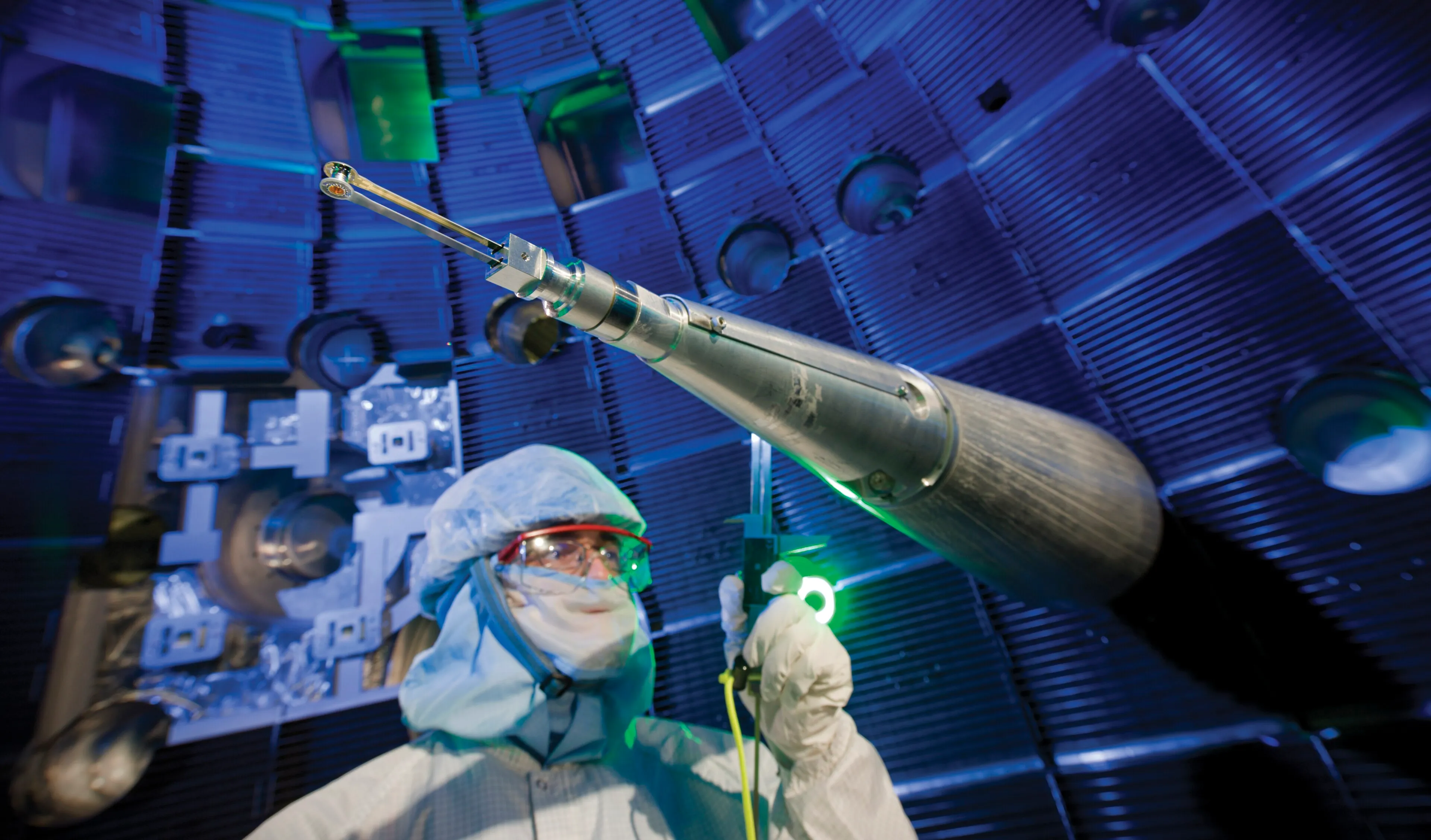
Inside the 10-metre target chamber of the National Ignition Facility, where a positioner centres the target before each experiment. Photo: Lawrence Livermore National Security, CC BY-SA 3.0, via Wikimedia Commons.

Even if all of that gets solved, design runs into a problem that discovery rarely faces: what should we design at all?
When I read OpenAI’s Harness Engineering piece this spring, I kept wondering where people should stand in the collaboration once the tools get this strong. Code is relatively simple. We know what “correct” looks like, so we can write taste into lint rules and let the agent move freely inside those boundaries. In science, “correct” keeps changing, and the value judgment about what we want to design drifts with the times.
Every design decision has a value decision behind it: which protein to design, which organism to put a gene circuit into. Engineers have always had to answer questions like these; before you build a dam, you have to work out which villages upstream will have to move. Science rarely had to answer them. Discovery only describes nature, and nobody is responsible for what nature looks like. Now that the lab and engineering are merging, what gets made is what you said you wanted, so you have to take responsibility for it, and these questions have followed engineering into the lab.
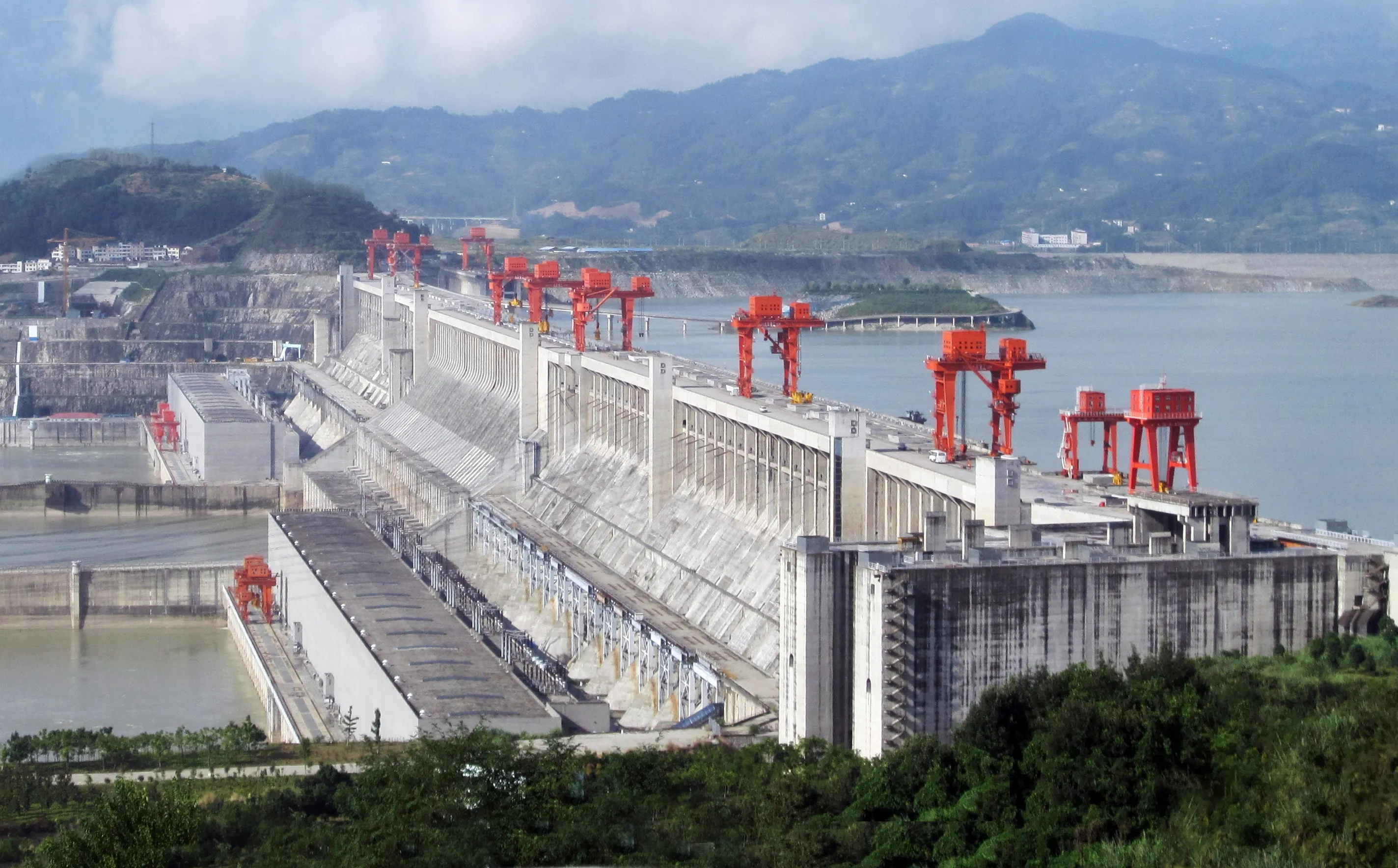
The Three Gorges Dam on the Yangtze. Building it meant moving more than a million people out of the reservoir area. Photo: Le Grand Portage, derivative by Rehman, CC BY 2.0, via Wikimedia Commons.

I wrote in another piece that until uncertainty is resolved, the final weight of value judgments should stay with people. The same holds in science: the search can be handed to AI, but “why design this and not that?” can only be answered by people.
We spent centuries learning to discover what nature looks like.
We don’t have centuries to learn to decide what it looks like.
The paradigm is already shifting, and the next generation of researchers will grow up inside the design paradigm. Once they’re in, who will answer the questions that discovery never had to?
I don’t have an answer. All I know is that the next time someone asks me whether AI will replace programmers, I’ll probably ask them back: so what are you planning to design with it?